Treatment of Protrusion, Herniation and Extrusion
Immediate medical attention is needed for the following symptoms:
Numbness in the perineal area, sudden motor disturbances (legs giving way), loss of bladder or bowel control.
What do these diagnoses mean?
Every back problem is a story – your story. But before we talk about treatment methods, it's important to understand what we're dealing with.
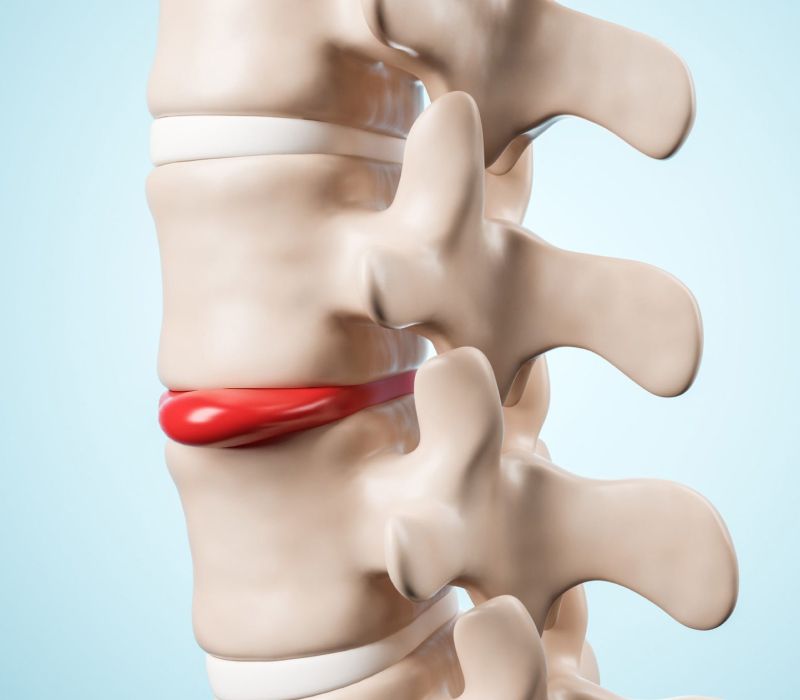
Protrusion
The contents of the intervertebral disc "bulge" out from their normal position but still remain within the disc's outer shell. Like a balloon that has stretched out a bit on one side but hasn't burst yet.
Herniation (prolapse)
The disc contents have broken through the outer shell and press on the nerves. It's like the contents of a balloon that have come out through a small opening. Painful, but treatable!
Extrusion
The disc material has completely separated and can move freely. Like a piece of balloon that has completely torn off. The most serious situation, but not hopeless.
Vertebral slipping (Spondylolisthesis)
One vertebra slips out of place and presses on the nerves. We cannot change the original cause, but we can reduce pain and inflammation symptoms and restore normal blood supply to the area.
Spinal canal narrowing (Stenosis)
The spinal canal becomes narrow and compresses the nerves. We cannot physically widen the canal, but we can support nerve function so they don't receive constant damage.
Resorption – The body's own miracle
This is the body's natural ability to "eat away" herniation material. Like the body cleaning up injury debris. The goal of our treatment is to stimulate and accelerate this natural healing process.
🔬 Our Technologies: Future medicine today
We use two of the world's most precise and effective technologies that work together to support your body's natural healing:
🧲 High-intensity magnetic therapy
How it works: Penetrates up to 18 cm deep into tissues, supports cellular energy production (ATP), improves blood circulation and reduces inflammation[6]. Creates conditions for faster recovery of the given area.
⚡ Shockwave therapy
How it works: Targeted acoustic waves stimulate tissue recovery, trigger new blood vessel growth (angiogenesis) through activation of endothelial growth factors, and activate the body's own anti-inflammatory mechanisms[4]. Supports the body's natural herniation material resorption process through improved blood supply.
How the treatment works – Your healing journey
📅 Treatment course plan (4-6 weeks)
🎯 Week 1: Pain relief and inflammation reduction
Frequency: 3 times per week
Goal: Relief of acute pain, calming of inflammatory processes and creating initial recovery conditions.
🔄 Weeks 2-3: Active healing processes
Frequency: 2-3 times per week
Goal: Stimulation of resorption, improvement of blood supply, restoration of nerve nutrition and tissue regeneration.
📈 Weeks 4-6: Consolidation of results
Frequency: 2 times per week
Goal: Strengthening of recovered tissues, complete restoration of functions and stabilization of results.
🛡️ Follow-up care: 6 months of rest and maintenance
Frequency: If needed, once per month
Goal: Caring for the problematic body part, maintaining results and preventing recurrent problems. The body learns a new "normal" state.
Why our technologies?
We have chosen these methods not simply because they are new, but because they work. Scientific studies show impressive results:
📊 Proven effectiveness
High-intensity magnetic therapy: A randomized controlled trial of 87 patients showed back pain reduction on the VAS scale of an average of 30-70% after just 4-8 sessions, with statistically significant functional improvement compared to standard treatment alone[1]. Similar results (up to 82.4% pain reduction) have been confirmed by other randomized trials[3][7][8] and a meta-analysis of 9 studies with 420 participants[9].
🚀 Wider evidence base
Shockwave therapy: A 2023 meta-analysis (22 studies, 1749 patients) confirmed the clinical effectiveness of ESWT for low back pain. Expert consensus (2023): ESWT is effective in the context of intervertebral disc herniation, though high-quality evidence is still limited[2].
🔗 Combined effect of both technologies
The combination of magnetic therapy and shockwave therapy has been directly studied for other tendon-joint conditions: a randomized trial of 86 patients showed the combined approach was statistically significantly superior compared to shockwave therapy alone[10]. This supports the principle behind using both technologies together.
🌿 Natural and safe
Requires no medications, injections or surgery. Natural magnetic fields and acoustic waves for the body. Minimal side effects, suitable for elderly and patients with chronic conditions.
- Krath A, Klüter T, Stukenberg M, et al. Electromagnetic transduction therapy in non-specific low back pain: a prospective randomised controlled trial. J Orthop. 2017;14(3):410-415. PubMed
- Extracorporeal shock wave therapy for low back pain: A systematic review and meta-analysis. PMC
- Hartard M, et al. Electromagnetic induction therapy for chronic low back pain, sham-controlled trial. J Rehabil Med. 2023. DOI: 10.2340/jrm.v55.3487
- Enhanced Spinal Therapy: Extracorporeal Shock Wave Therapy for the Spine. PMC
- Incidence of Spontaneous Resorption of Lumbar Disc Herniation: A Meta-Analysis. PubMed; Prevalence, clinical predictors, and mechanisms of resorption in lumbar disc herniation: a systematic review. Orthopedic Reviews
- Pulsed Electromagnetic Field Therapy (PEMF) - mechanism, intensity and penetration depth overview. Physiopedia
- Effectiveness of Electromagnetic Field Therapy in Mechanical Low Back Pain: A Randomized Controlled Trial. PMC
- Elshiwi AM, et al. Effect of pulsed electromagnetic field on nonspecific low back pain patients: a randomized controlled trial. Braz J Phys Ther. 2019;23(3):244-249.
- Sun X, et al. Efficacy of pulsed electromagnetic field on pain and physical function in patients with low back pain: A systematic review and meta-analysis. 2022. SAGE Journals
- Klüter T, Krath A, Stukenberg M, et al. Electromagnetic transduction therapy and shockwave therapy in 86 patients with rotator cuff tendinopathy: a prospective randomized controlled trial. Electromagn Biol Med. 2018;37(4):175-183.
ℹ️ The information on this page is for informational purposes only and does not replace professional medical diagnosis or treatment.
Who can benefit from this treatment?
Our technologies don't ask who you are or how long you've been in pain. They simply help your body heal itself.
✅ Suitable for you if...
- MRI or CT has shown protrusion, herniation or extrusion
- Chronic back pain won't go away with conventional methods
- Pain radiates to leg or arm (radiculopathy)
- You experience numbness, tingling or weakness in limbs
- You want to avoid surgery or have been waiting in surgery queue for long
- You've already tried physiotherapy, massages, but results are temporary
- You need a fast and effective solution that doesn't disrupt daily life
❌ Not suitable if...
- You have a pacemaker or defibrillator
- You are pregnant
- You have metal implants in the treatment area
- There is active cancer in the treatment area
- Extremely acute situation requiring immediate surgical intervention
Your back and neck don't have to hurt
Every day you suffer is a day you don't live your full life. But today you can change that. Our technologies are waiting to help your body heal itself – in a natural, safe and effective way.
Most important questions
Book appointment for this condition: