Gua Sha Therapy in Tallinn
📍 Services available at: Tallinn (Viimsi Hospital, Ravi tee 4) · Pärnu (Rüütli 47)
Traditional Chinese healing art
Gua Sha (刮痧) is a traditional Chinese medicine method over 2000 years old, belonging to the Traditional Chinese Medicine (TCM) arsenal. The word "Gua" means scraping or rubbing, while "Sha" refers to erythema or redness that occurs during treatment.
This natural healing method is based on the traditional understanding that illnesses and pain arise from stagnation of energy (qi) and blood in the body. Modern research confirms Gua Sha's pain-relieving effect through a different lens: the method measurably increases local microcirculation and affects pain-mediating systems (serotonergic, noradrenergic, and opioid) as well as nociceptors directly[1].
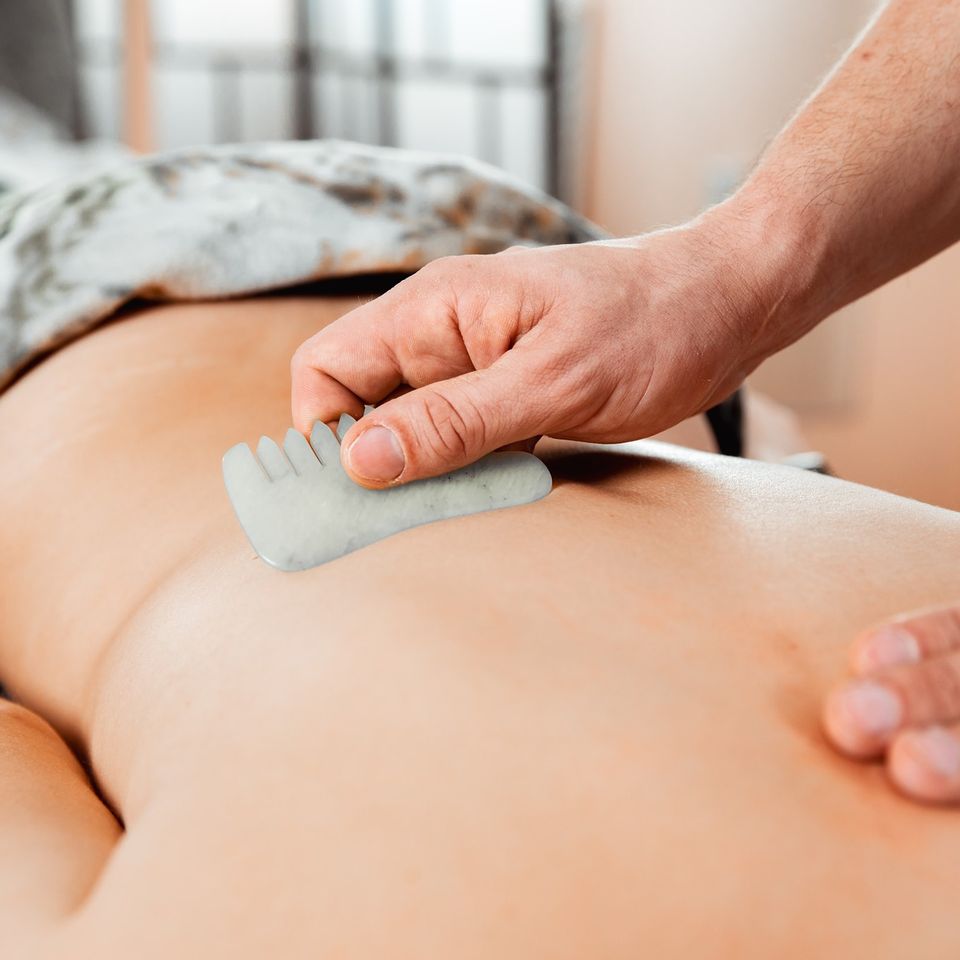
Gua Sha tools
We use jade or quartz tools - both are natural, hygienic, smooth materials that glide easily over the skin. The choice of material does not affect the scientific effectiveness of treatment; what matters is the tool's shape and edge angle, which are optimized to stimulate the skin effectively yet gently.
How does Gua Sha therapy work?
Stimulates circulation
Scraping movements measurably increase microcirculation in the treated area - a pilot study using laser Doppler imaging showed a significant increase in blood flow at the treated site[2], bringing more oxygen and nutrients to tissues while accelerating metabolism. A crossover study in the elderly found greater pain reduction (21-25%) and functional disability improvement (45-52%) with Gua Sha compared to hot pack therapy (16-18% and 39-42% respectively)[5].
Activates lymphatic system
Stimulates lymph flow, helping the body eliminate metabolic waste products and inflammatory substances.
Reduces muscle tension
Releases fascia and muscle tissue tension, reducing pain sensations and improving mobility and flexibility. A randomized trial also showed measurable reduction in thoracolumbar fascia thickness and tissue stiffness following treatment[3].
Chronic pain relief
A randomized controlled trial of 48 patients with chronic neck pain found statistically significant pain reduction following Gua Sha therapy compared to the control group (p<0.001), as well as improved overall health status[1].
Calms nervous system
Rhythmic scraping movements activate the parasympathetic nervous system, reducing stress and anxiety.
Strengthens immune system
A Harvard Medical School study found that Gua Sha activates the enzyme heme oxygenase-1 (HO-1), which has antioxidant, anti-inflammatory, and immunoprotective effects[4]. This provides a scientific explanation for why Gua Sha helps reduce not just muscle tension but overall inflammation in the body.
- Braun M, et al. Effectiveness of Traditional Chinese "Gua Sha" Therapy in Patients with Chronic Neck Pain: A Randomized Controlled Trial. Pain Med. 2011. Pain Medicine (Wiley)
- Nielsen A, et al. The Effect of Gua Sha Treatment on the Microcirculation of Surface Tissue: A Pilot Study in Healthy Subjects. ScienceDirect
- Effects of Gua Sha therapy on thoracolumbar fascia thickness and clinical outcomes of patients with chronic nonspecific low back pain. PMC
- Kwong KK, et al. Bioluminescence Imaging of Heme Oxygenase-1 Upregulation in the Gua Sha Procedure. J Vis Exp. 2009. PMC
- The effects of Gua sha on symptoms and inflammatory biomarkers associated with chronic low back pain: A randomized active-controlled crossover pilot study in elderly. ScienceDirect
ℹ️ The information on this page is for informational purposes only and does not replace professional medical diagnosis or treatment.
Which conditions does Gua Sha help?
Normal reaction: temporary redness
During Gua Sha therapy, temporary redness (erythema) appears on the skin, which is completely normal and expected. This redness indicates that:
- Circulation has been activated in the treatment area
- Tissue is responding with increased microcirculation
- The therapy is working effectively
- The body's natural healing process has been initiated
Redness typically lasts 2-5 days and then disappears completely. The intensity and duration of redness may vary depending on the person's condition and problem severity.
Gua Sha therapy process
Assessment
Therapist evaluates your condition and determines appropriate treatment areas
Preparation
Skin cleansing and application of massage oil if needed
Gua Sha technique
Controlled scraping movements with jade or quartz tools in specific directions
Completion
Gentle skin cleansing and application of soothing lotion
Aftercare recommendations
Important information about post-treatment care for optimal results
Important aftercare
After Gua Sha therapy, it's important to follow recommendations for optimal results and safety:
- Drink plenty of water - at least 2-3 liters daily to support metabolism
- Avoid heavy physical exertion on the first day - give your body time to recover from therapy
- Keep treatment area warm - avoid cold wind and air-conditioned rooms
- Don't take hot shower or sauna for 6-8 hours after treatment
- Limit alcohol consumption for 24 hours after therapy
- Rest adequately - give your body time to engage in healing processes
Discover the magic of traditional Chinese medicine
Gua Sha therapy offers a natural path to health and wellbeing. Experience centuries-old wisdom in a modern approach.
Gua Sha therapy at Viimsi Hospital is a great choice for clients from the Mähe and Randvere areas who appreciate quick, traffic-free access.